
Perceive the pedestrian environment as average or below
URBAN DESIGN + POLICY · PROFESSIONAL PRACTICE
HARIT COMMONS
01 · QUESTION
02 · DIAGNOSIS
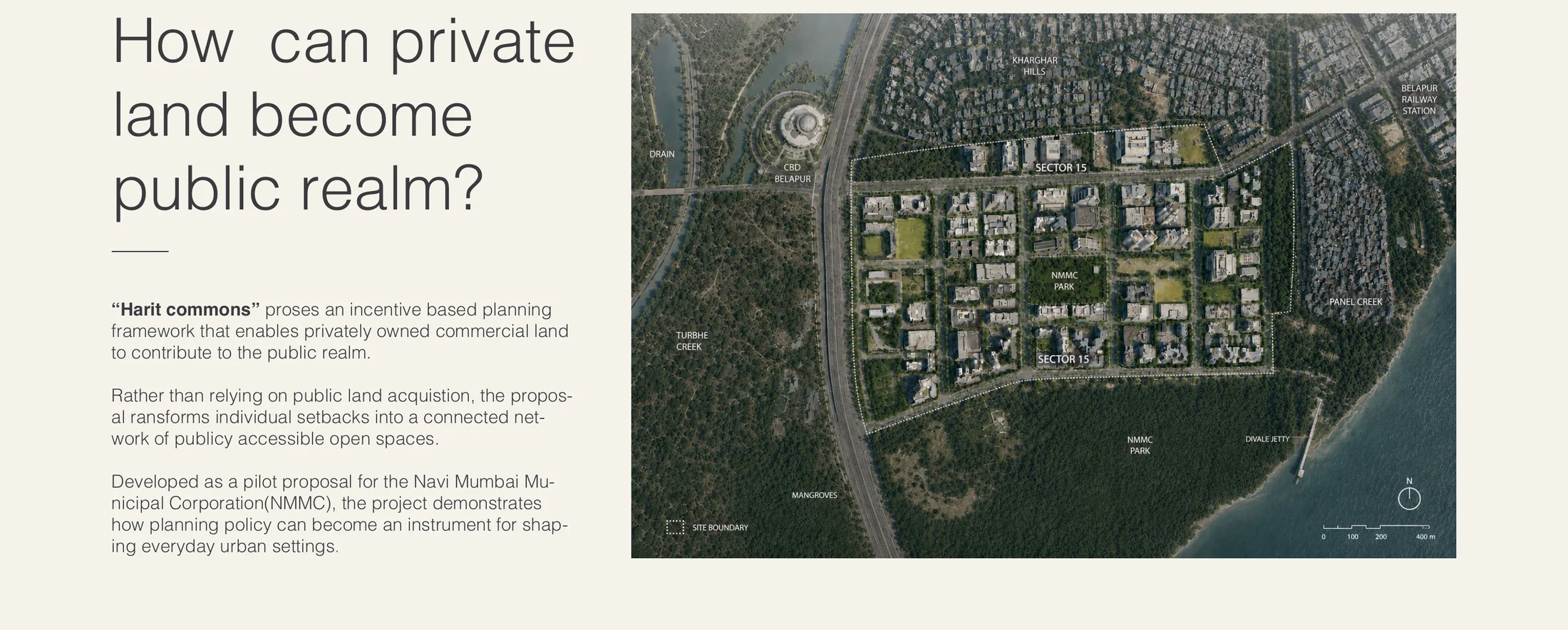
The public realm exists as fragments.
31HA
of privately owned setbacks within the district.
Yet these spaces do not operate collectively as public realm.
DISTRICT READING · CBD BELAPUR
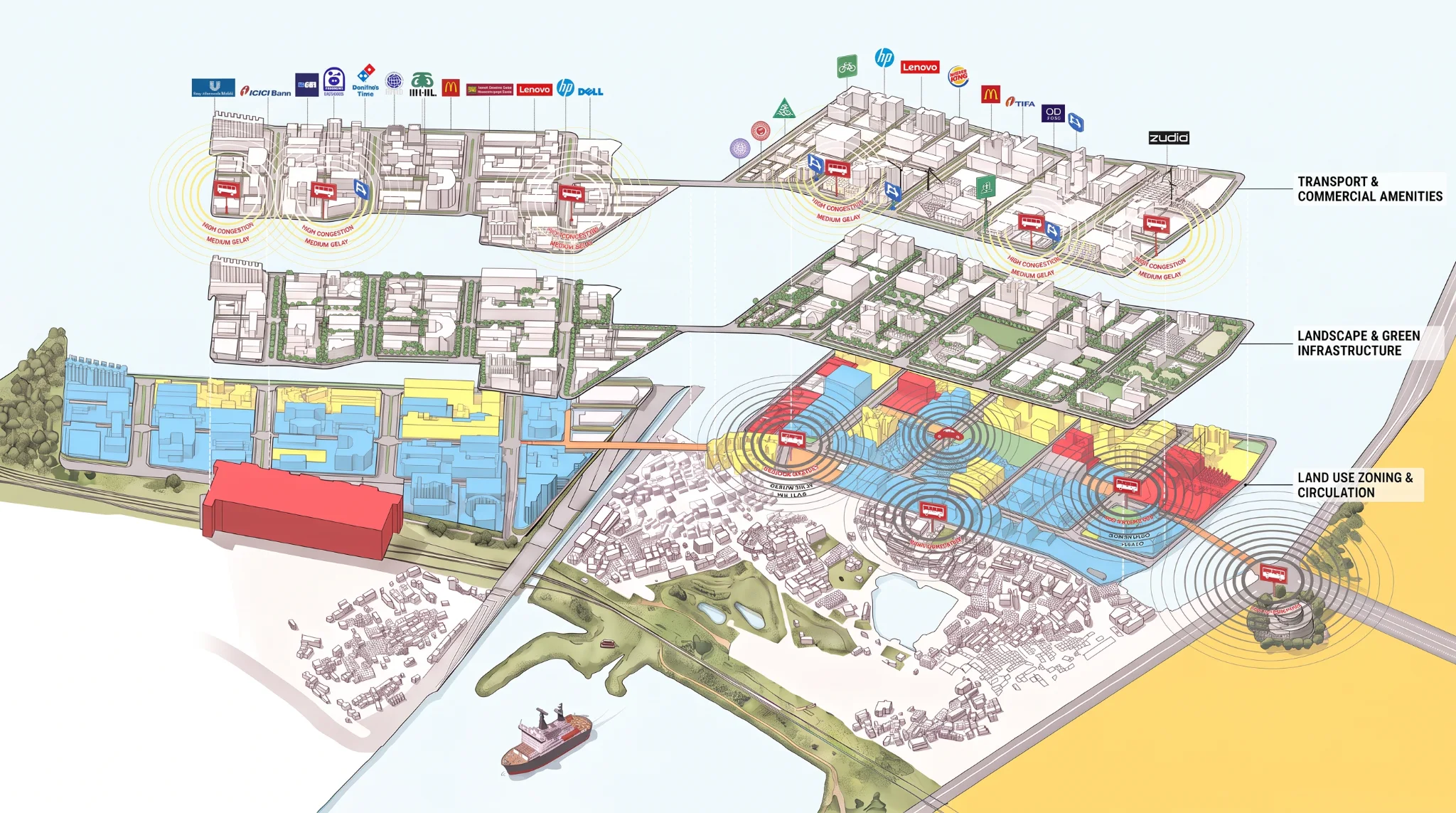
Commercial activity, transport, landscape and open space coexist within the district, but operate as separate spatial systems.
FIELD RESEARCH · 200 PEDESTRIANS
What does this fragmentation mean for everyday walking?
Walk only 50–100 m under current conditions
Would shift to motorised transport if conditions do not improve
Priority: shade paths + last-mile connectivity
WALKABILITY PERFORMANCE · AVERAGE ACROSS FIVE SURVEYED SECTORS
Paths exist. Everyday usability breaks down elsewhere.
GOOD ≥ 3.5NEEDS WORK 2.5–3.5CRITICAL < 2.5
Basic paths and crossings score comparatively well. The weakest conditions emerge around accessibility, amenities, safety, obstruction and competing modes.
STREET CONDITION · MOVEMENT + PARKING
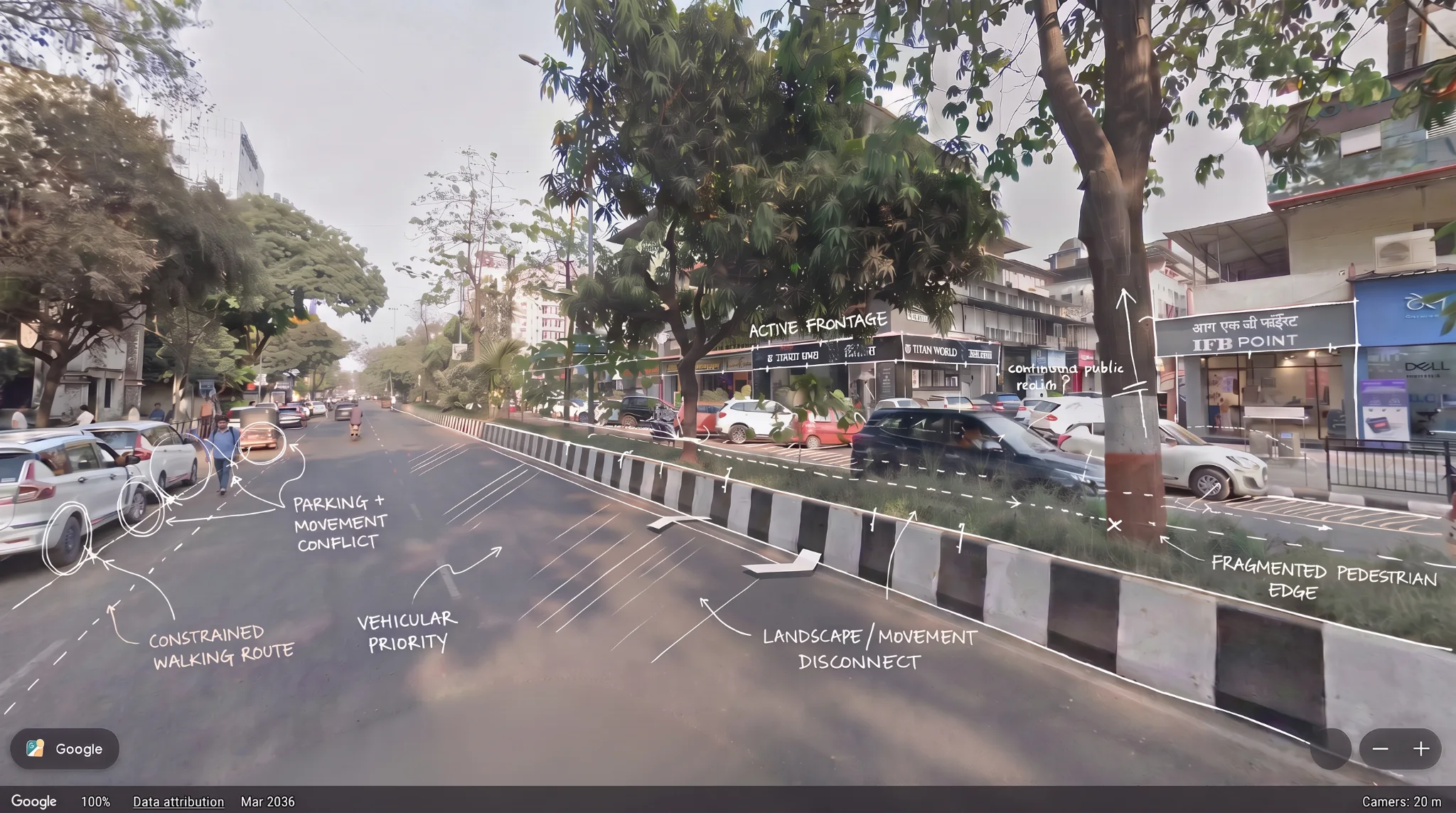
Movement competes for the street
Parking, pedestrian movement and vehicles converge around active commercial frontage, while landscape and walking remain spatially disconnected.
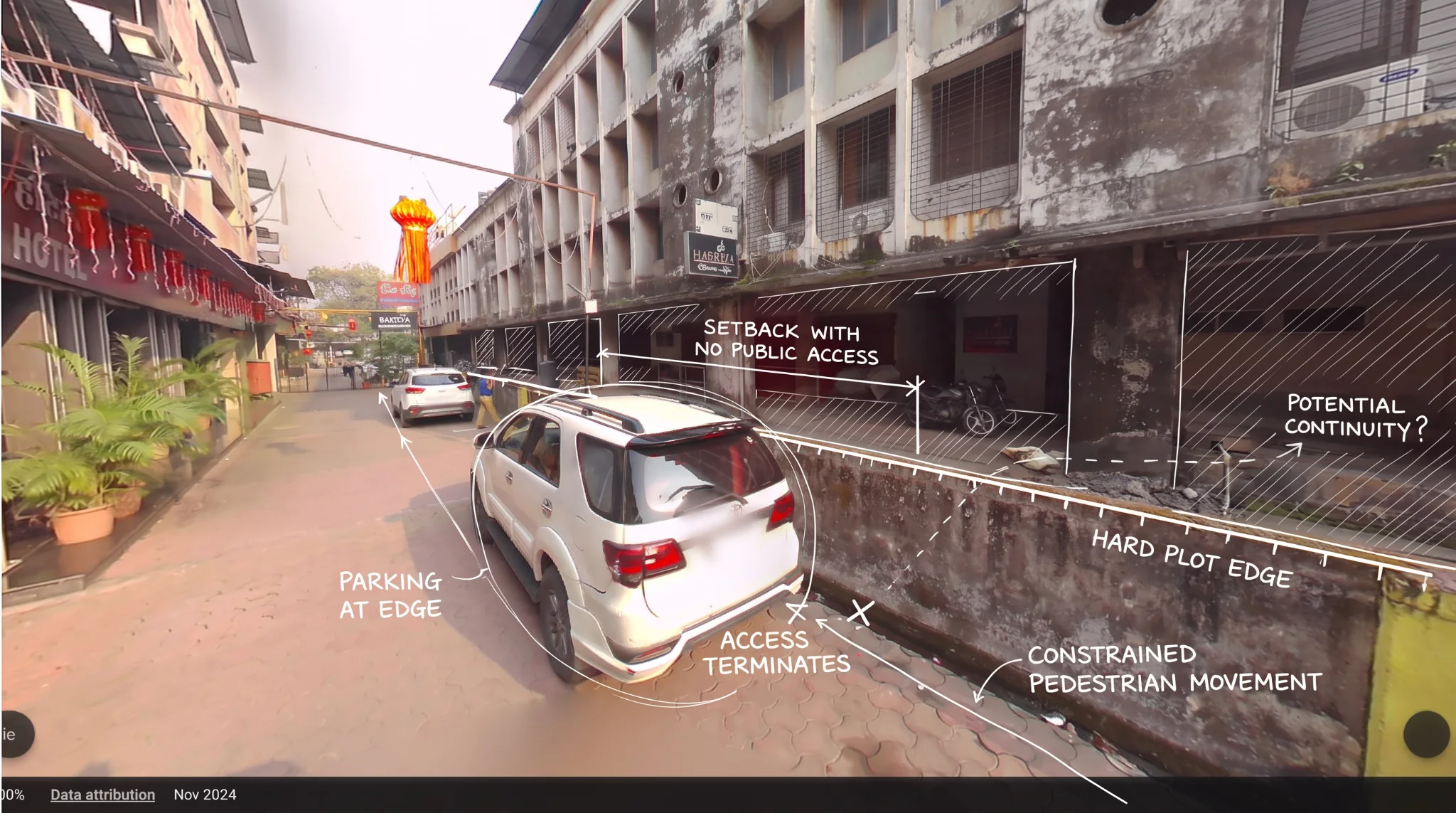
PLOT CONDITION · COMMERCIAL EDGE
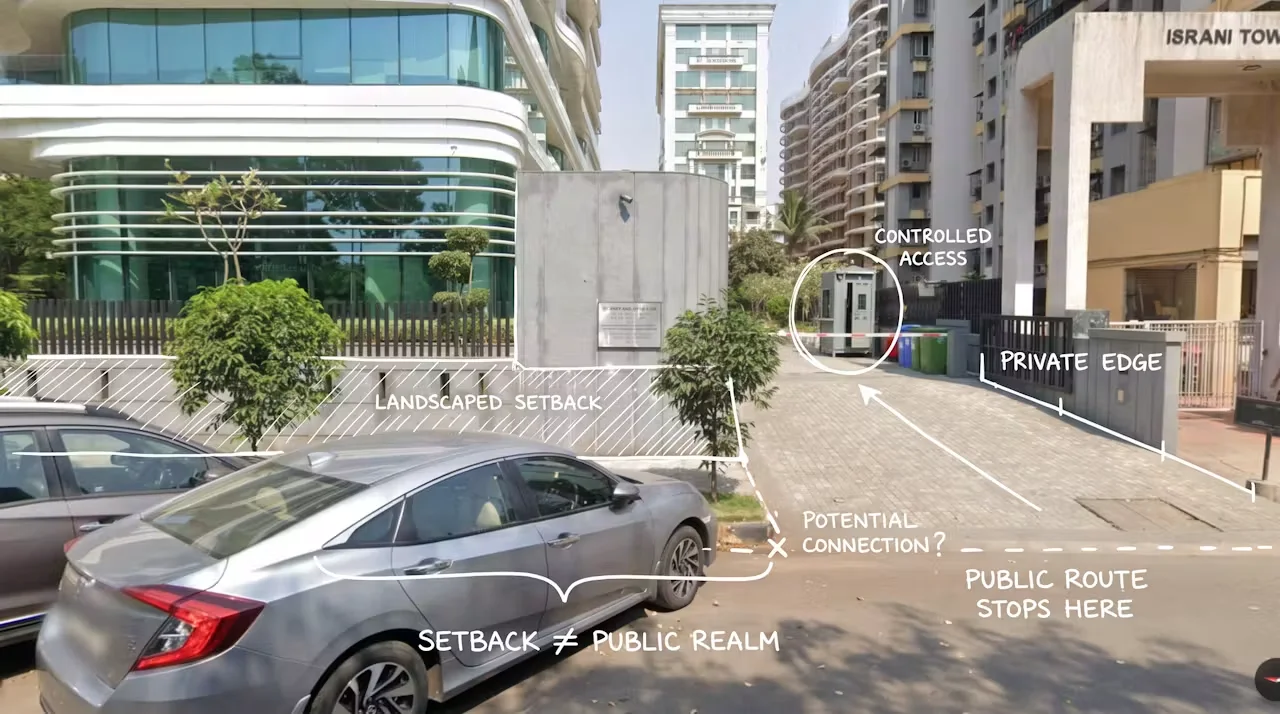
PLOT CONDITION · CONTROLLED EDGE
The setback exists. Access does not.
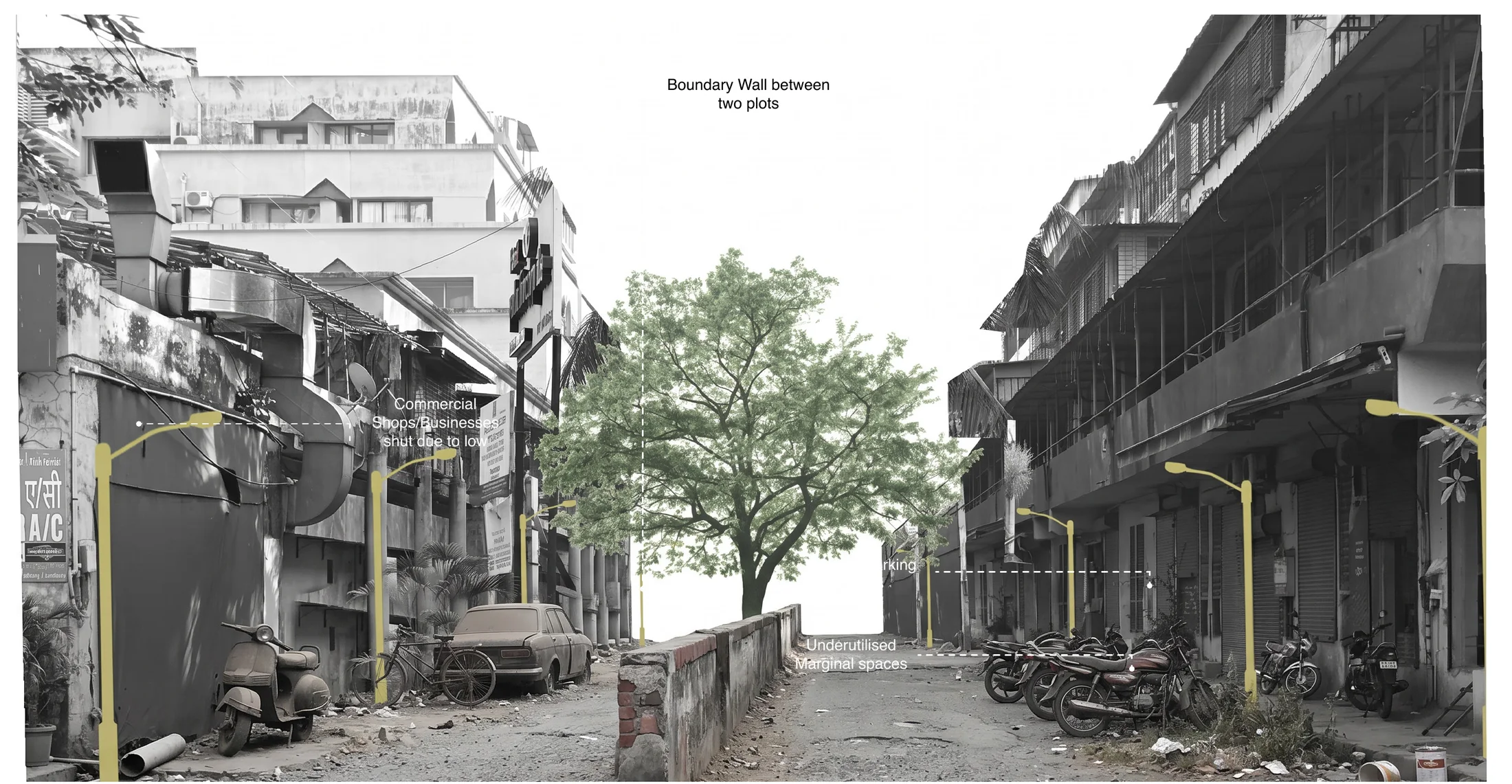
Commercial setbacks provide spatial capacity, but continuous plot boundaries prevent them from functioning as part of the pedestrian network.
Setback does not mean public realm
Even landscaped setbacks remain disconnected when access is controlled and movement cannot continue through the plot.
GROUND CONDITION · MOVEMENT + PARKING
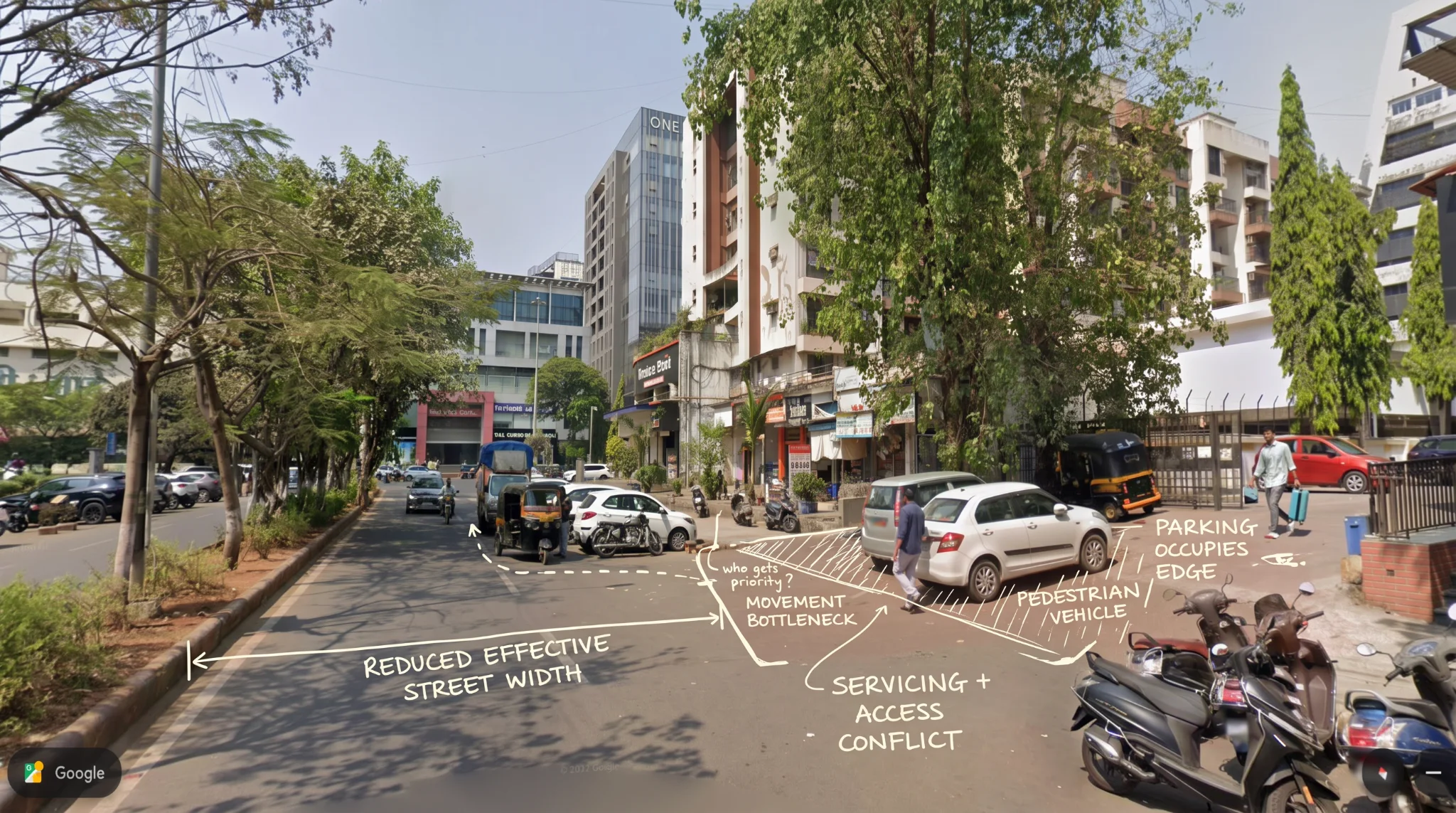
Competing for the street
Parking, servicing, pedestrian movement and vehicles converge within the same street space.
The challenge is not the absence of open space, but the absence of a framework that connects it.
03 · DESIGN CONCEPT
From isolated setbacks to an everyday commons.
Harit Commons connects the everyday activities of the district with the spatial capacity already embedded within its urban fabric.
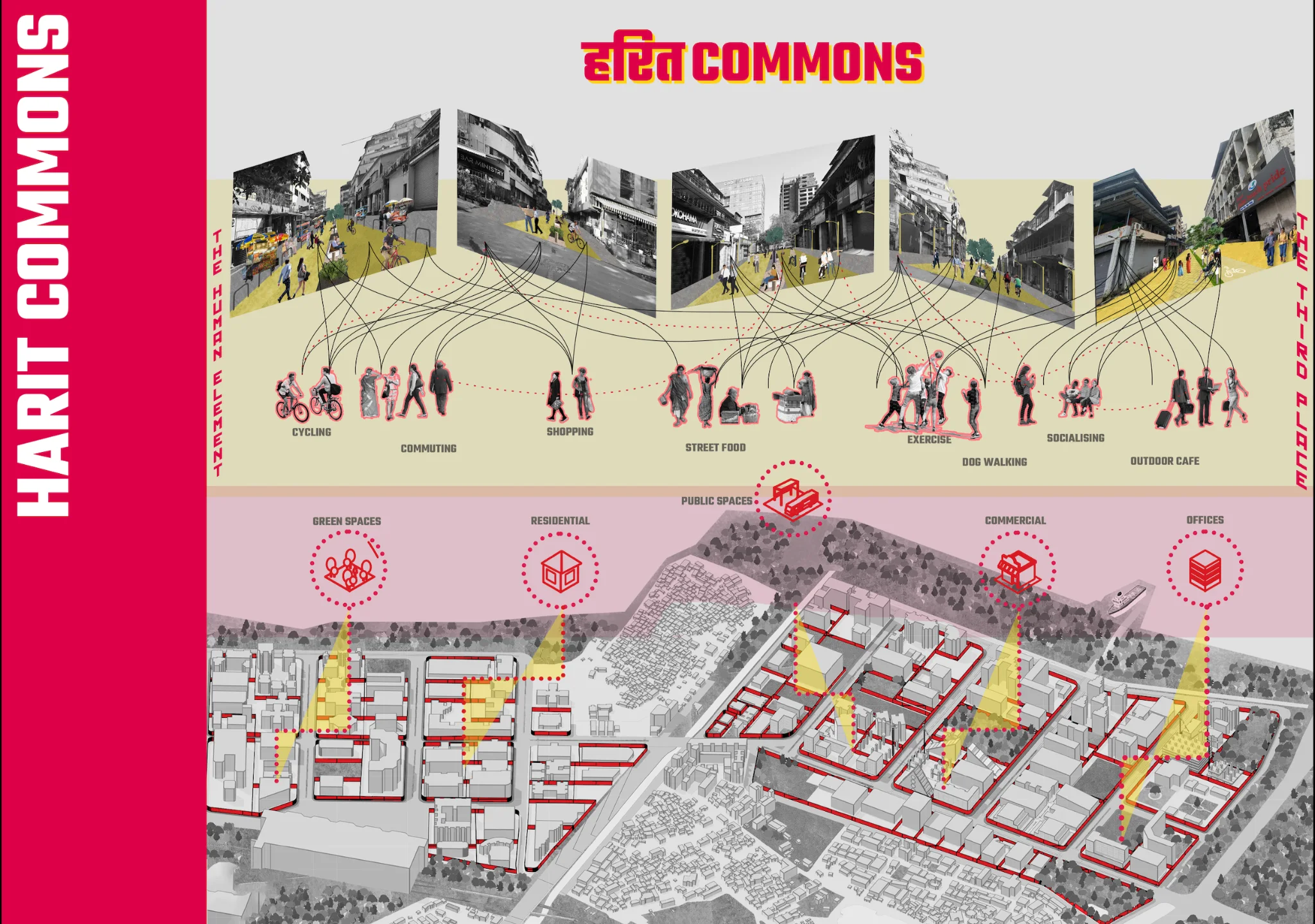
04 · SPATIAL PROPOSAL
Connect the margins.
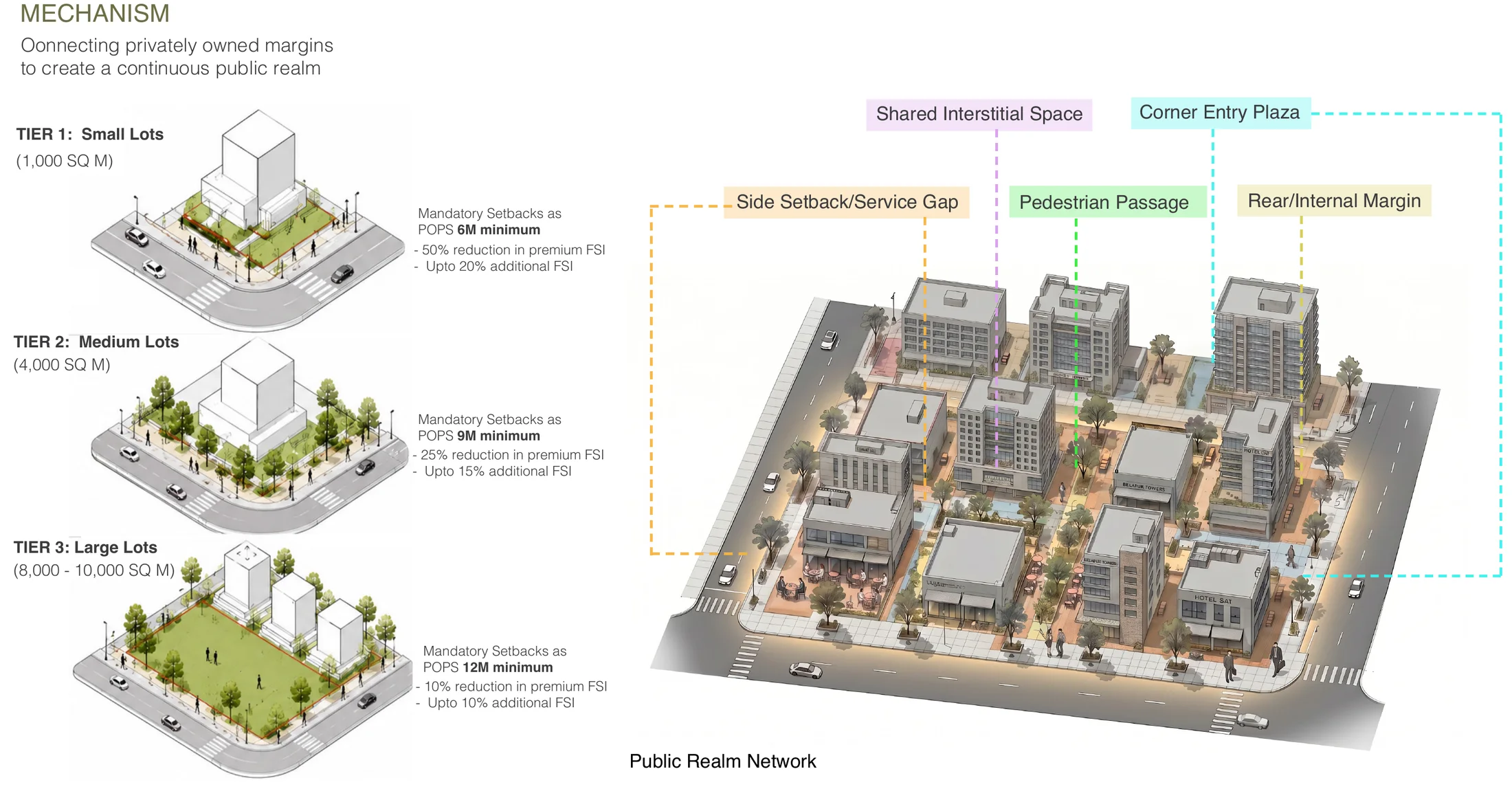
Opening selected plot edges allows adjoining commercial setbacks to operate as a continuous public realm while buildings and individual plots remain in place.
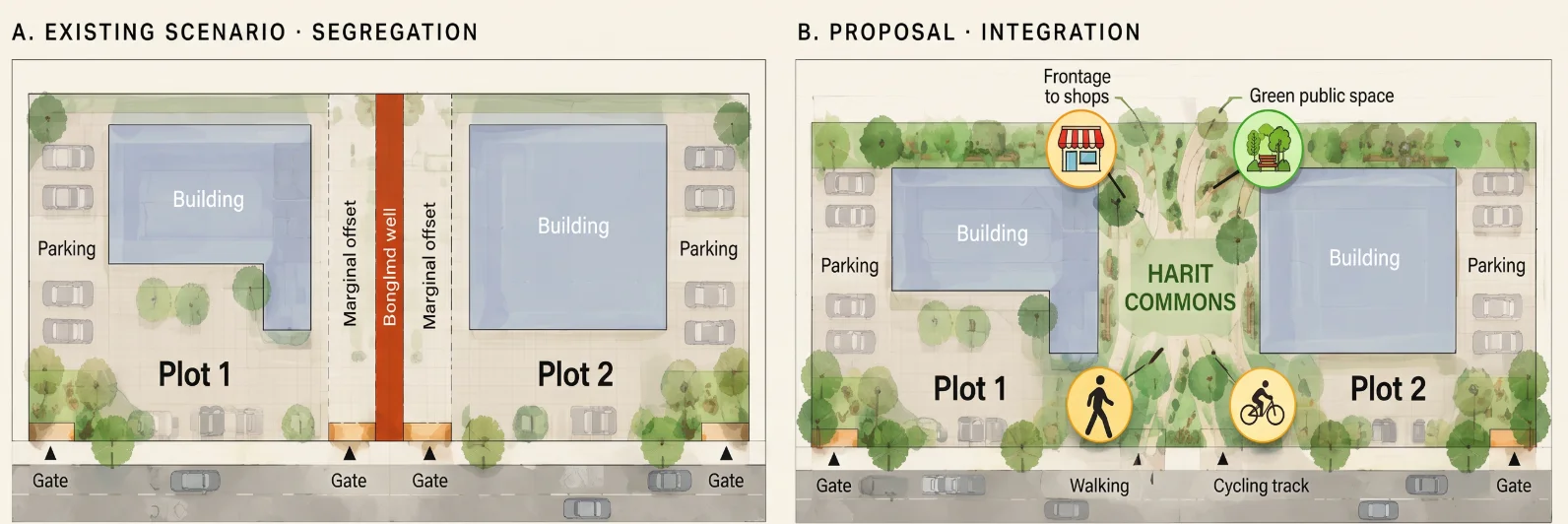
Same plots. Same buildings. The intervention is concentrated at the edge: adjoining setbacks are connected to form a continuous public realm.
DESIGN APPLICATION · SECTOR 15
Connecting privately owned margins to create a continuous public realm.
05 · GOVERNANCE + IMPLEMENTATION
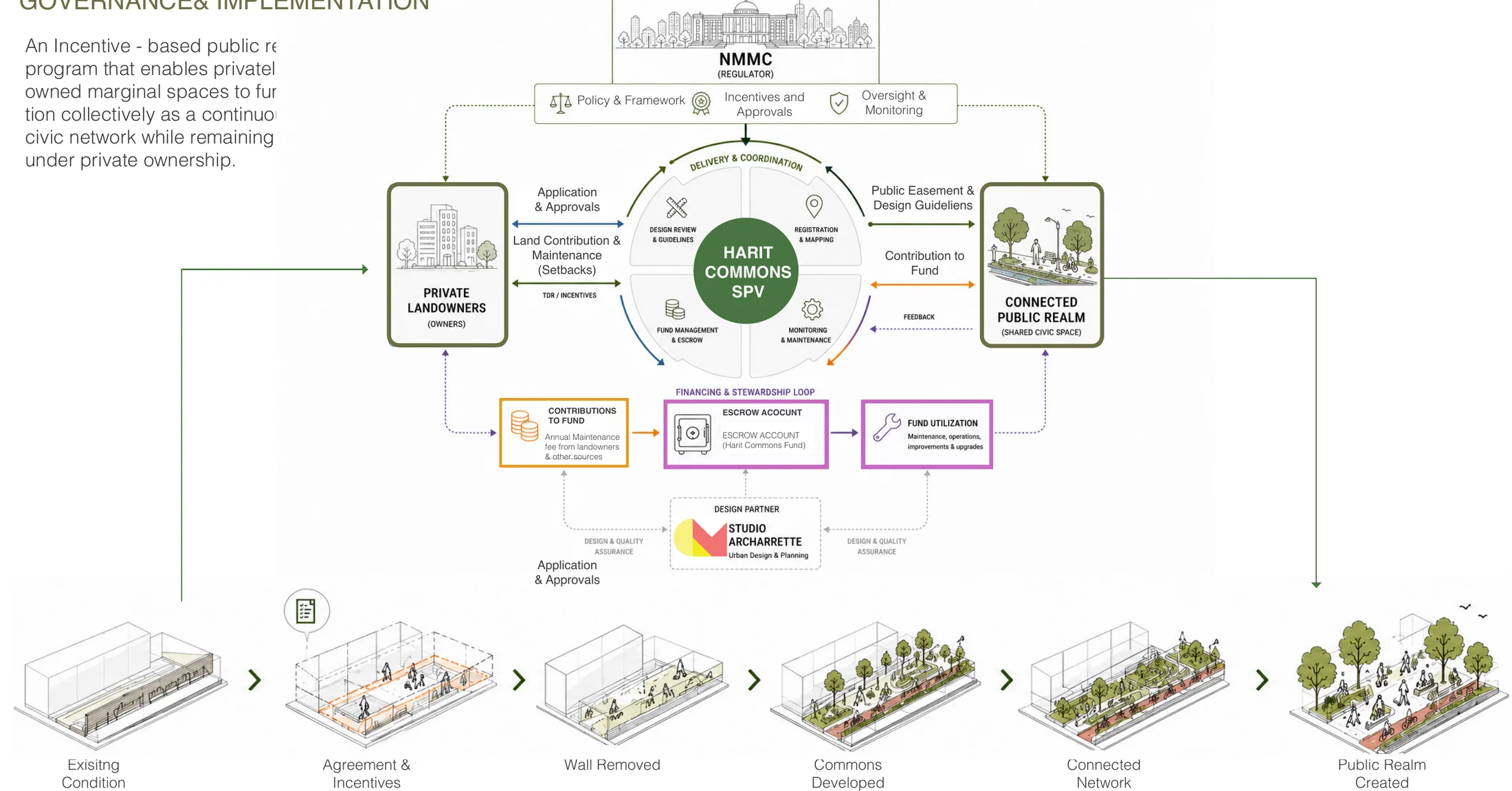
A framework linking landowners, public oversight, stewardship and the connected public realm.
06 · EXISTING CONDITION
The margin today.
07 · MECHANISM
Unlocking the margins.
08 · THE COMMONS
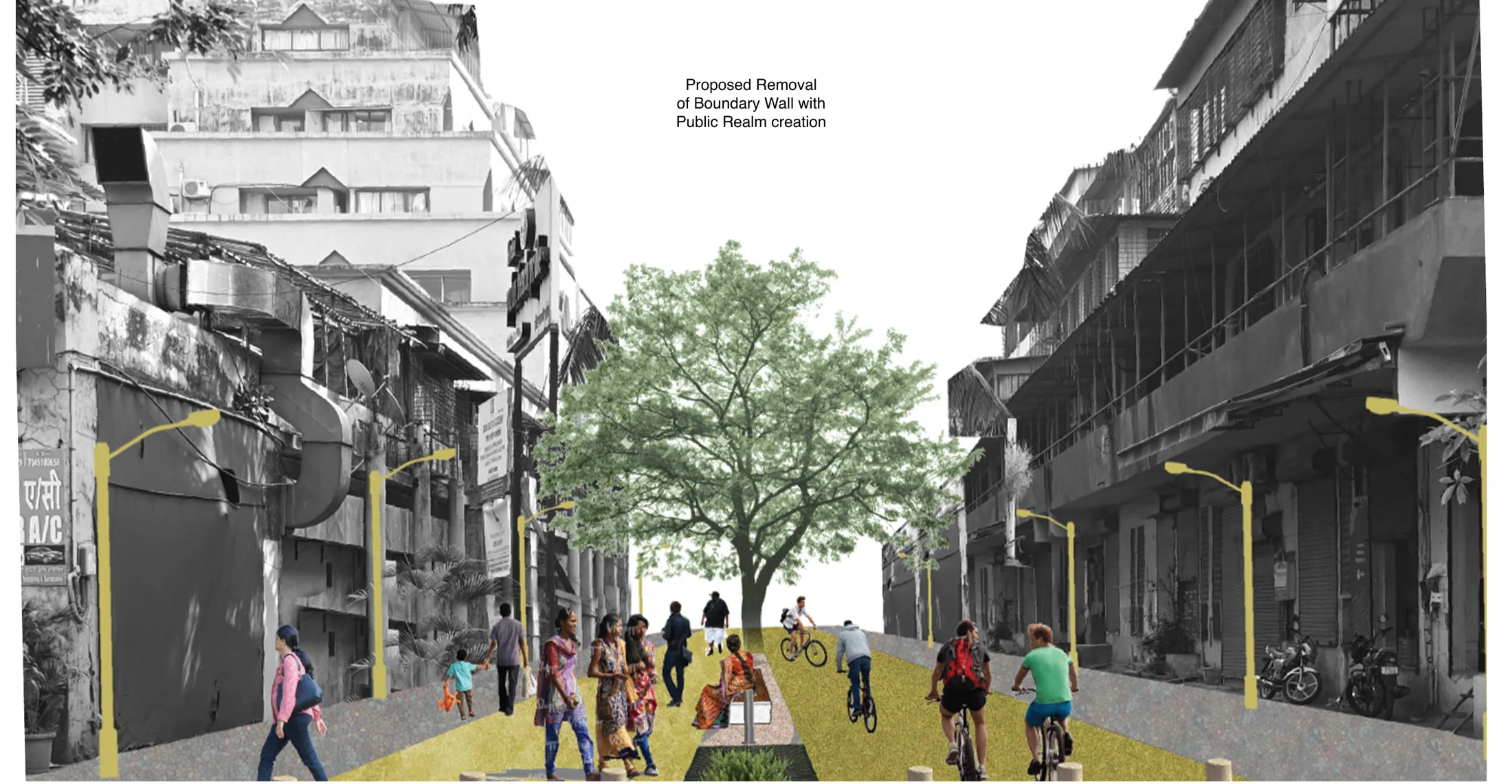
The Harit (Green) Commons.
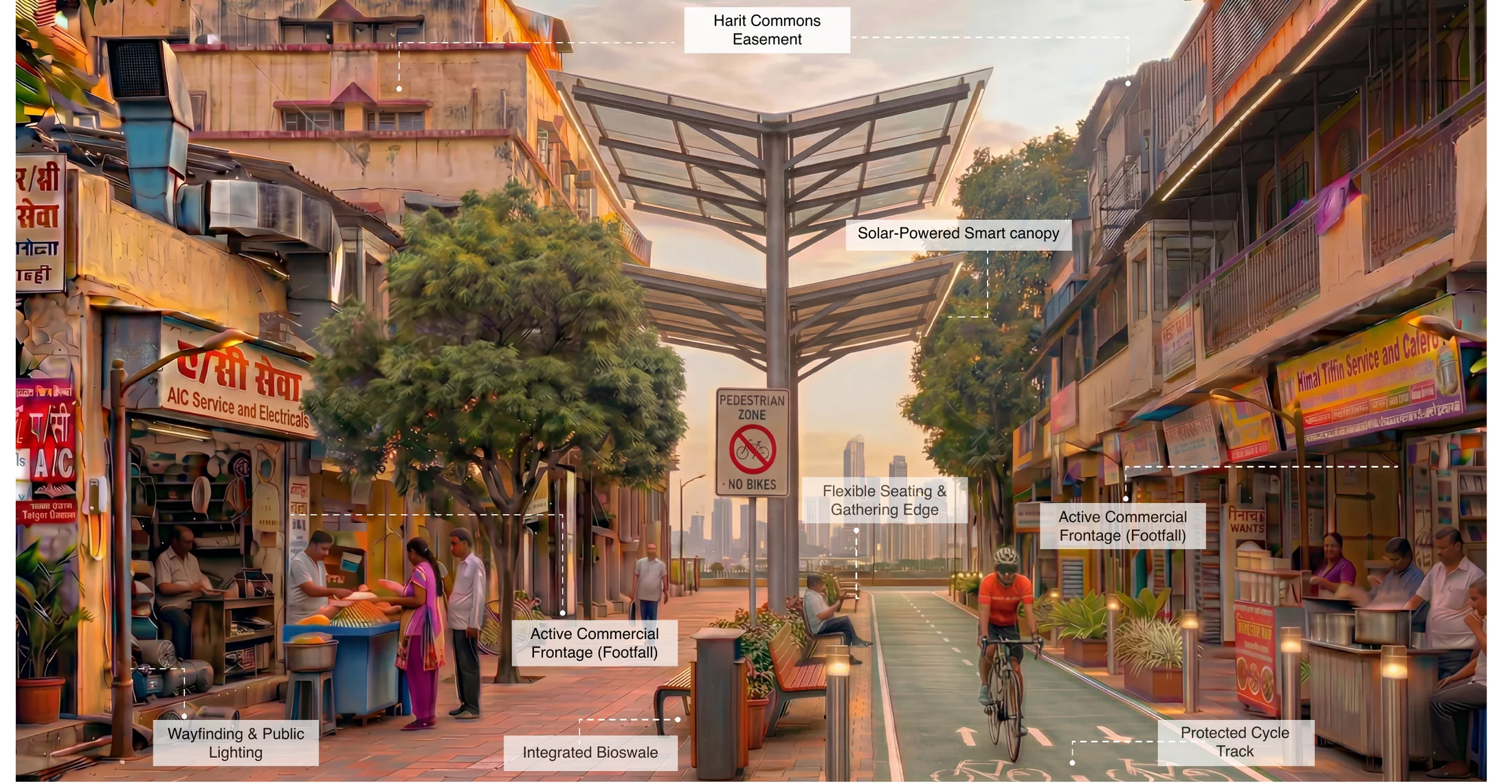
Once connected, the margins become a shared civic landscape supporting movement, commerce and everyday social life.
09 · MUNICIPAL PRESENTATION
From proposal to municipal discussion.
Harit Commons was presented as a pilot proposal to Navi Mumbai Municipal Corporation (NMMC), bringing the spatial, governance and implementation framework into discussion with the city.
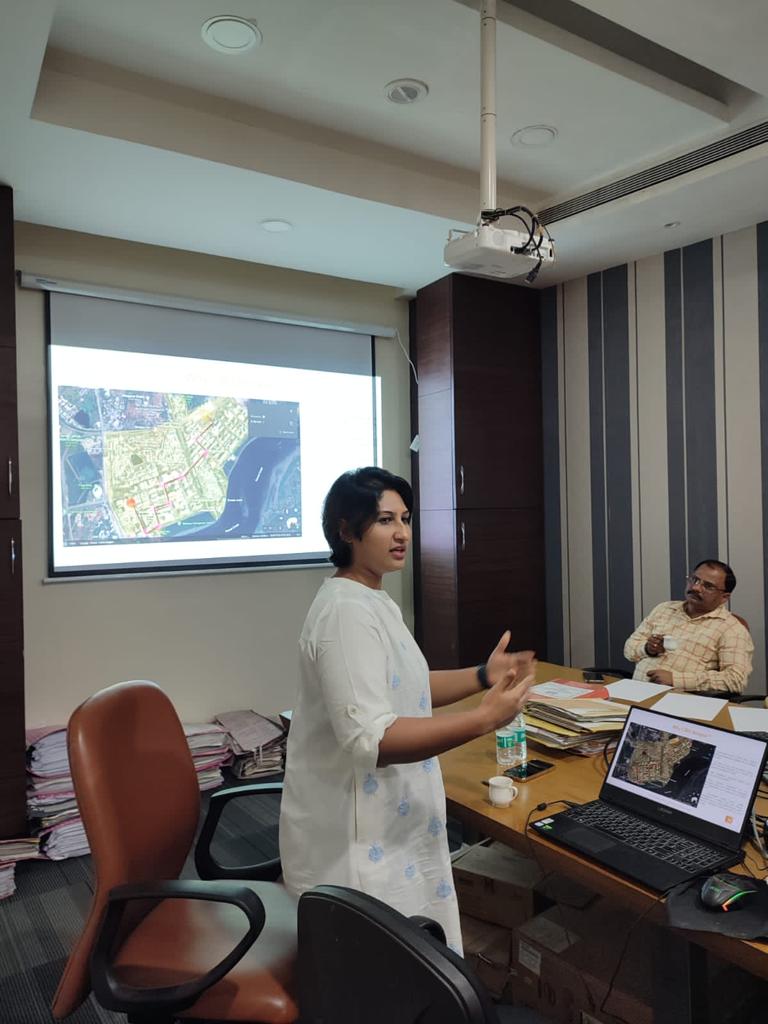
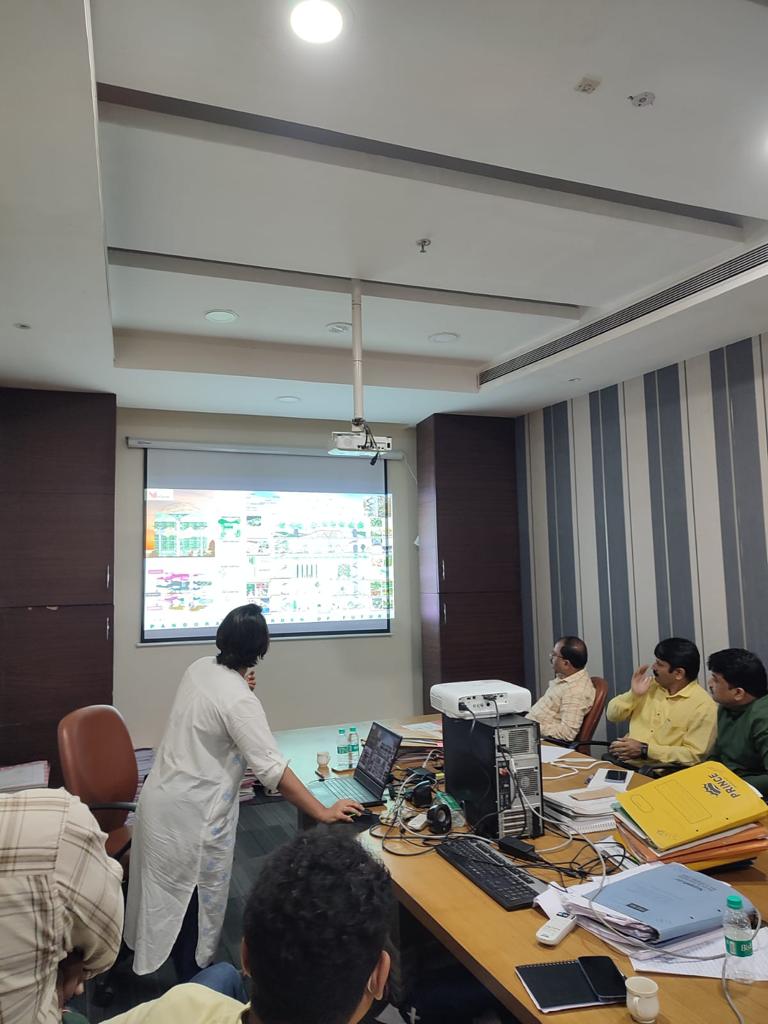
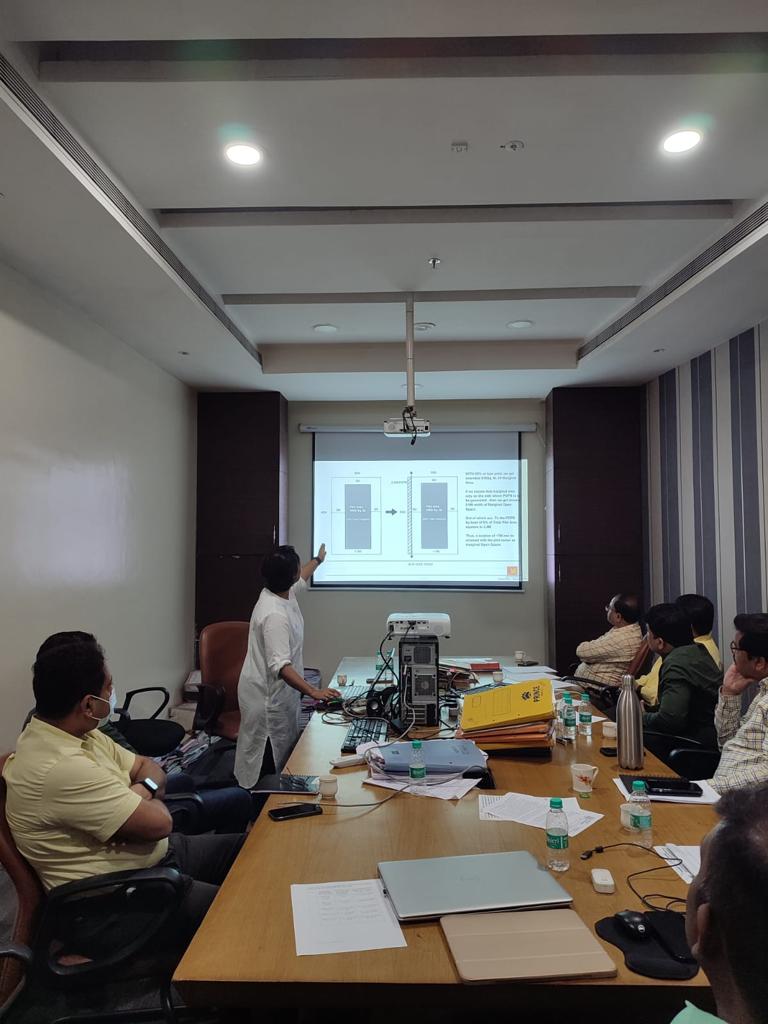
Pilot proposal presentation · Navi Mumbai Municipal Corporation · 2022